
GLOS and our partners are continuously testing and deploying new technologies, from novel sensors on buoys to Seagull upgrades. But how do these new technologies actually get into the hands of users? How does the idea of a product make its way to a shelf (online or real-world)? Typically, it takes years of development, trial and error, and refinement. Start-up companies start as one person with a great idea and a passion that then requires support to get it to launch. One common method of support is through accelerator programs that allow investors to finance and mentor companies they believe in.
In 2025, the Great Lakes Innovation Accelerator was launched at gener8tor.
GLOS, alongside Michigan Technological University’s (MTU) Great Lakes Research Center (GLRC) and other partners, are supporting gener8tor’s Great Lakes Innovation Accelerator to help grow water-focused technologies. We’d like to introduce you to a few of the innovators:
Innovation only matters if it ships. Great Lakes challenges don’t wait on traditional R&D timelines, and by pairing founders with GLOS, MTU, and the rest of our partner network, GLIA is building the commercialization pipeline this region needs.
Ryan Jeffrey
Vice President, gener8tor
Archway Pet Food
The Great Lakes ecosystem has faced decades of disruption from invasive species, with Asian carp posing one of the most significant ongoing threats to native biodiversity and the regional food web. At the same time, there is growing consumer demand for more sustainable, transparent pet food options. Archway Pet Food sits at the intersection of these challenges and opportunities by transforming invasive Asian carp into high-quality pet food and treats. By creating economic value from an ecological problem, Archway is helping incentivize removal of invasive species while building a new category of environmentally responsible pet nutrition.
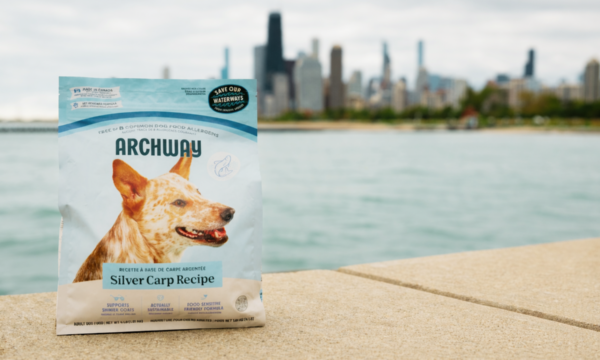
To better quantify its environmental impact, Archway is partnering with researchers at MTU GLRC to conduct a Life Cycle Assessment (LCA) of its products—a project that will generate estimates of the environmental footprint of their products in key dimensions of impact, like global warming and effect on ecosystem health. For stakeholders across the Great Lakes region, this effort highlights how local innovation can contribute to both economic development and environmental restoration. By grounding its sustainability claims in rigorous science, Archway aims to continuously improve its products and provide a transparent benchmark for what sustainable pet food can look like.
Nucleic Sensing Systems
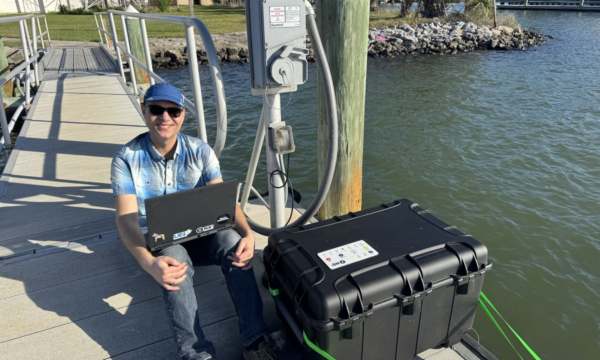
Nucleic Sensing Systems (NS2) has created an autonomous biosensor platform that provides high-frequency, in-field genetic data. Photo courtesy of NS2
While Asian Carp are an easy-to-spot threat, there are numerous others that require specialized equipment and sensors. Nucleic Sensing Systems (NS2) has the potential to significantly enhance how the Great Lakes are monitored and managed by enabling continuous, real-time detection of biological threats in the water. Today, many monitoring efforts rely on periodic sampling and lab analysis, which can delay detection of harmful algal blooms, pathogens, and other emerging risks. NS2’s autonomous biosensor platform provides high-frequency, in-field genetic data, allowing agencies and partners amongst GLOS to identify issues earlier and respond more effectively.
By integrating with existing observing infrastructure, NS2 can help transform the Great Lakes into a more data-driven, proactive system. Earlier detection supports drinking water utilities in optimizing treatment, helps protect fisheries and aquaculture from disease outbreaks, and strengthens regional response to biological events that impact public health and local economies. Over time, this type of continuous biological intelligence can improve forecasting, inform management decisions, and support a more resilient Great Lakes ecosystem.
Lacuum
In addition to early warning and detection of species, there is a real need for technology that can address concerns. One of these concerns is for nuisance algae and weeds in the hundreds of inland lakes around the region. Not only are they unsightly, they can clog drainage pipes in man-made reservoirs and turn harmful. Lacuum is offering a solution for that.
Lacuum is a robotics R&D and consulting firm—founded by engineers and researchers deeply committed to tackling messy, real-world challenges. Their team brings decades of experience in autonomy and deployment from university labs and industry partners like Honda Marine. They specialize in conceiving and building autonomous robots—both aquatic and terrestrial—and support clients with system design, SLAM (Simultaneous Localization and Mapping), perception, embedded development, and practical field testing.
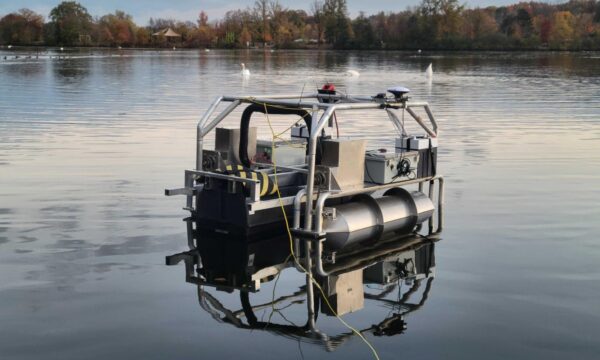
Lacuum’s primary domain of expertise lies in environmental cleanup, particularly in aquatic and shoreline environments. Their autonomous surface vessels are purpose-built for lake, river, coastal, and shoreline cleanup—designed to detect, remove, and manage pollution efficiently, without the need for crews or chemical agents. In addition to deploying their own robotic systems, Lacuum also offers consulting services and R&D collaboration: guiding startups, municipalities, and research organizations through robotics architecture, autonomy integration, and market analysis.