

As we continue to celebrate and reflect on 20 years of GLOS, we bring you insights from GLOS’ first Executive Director – Jen Read.
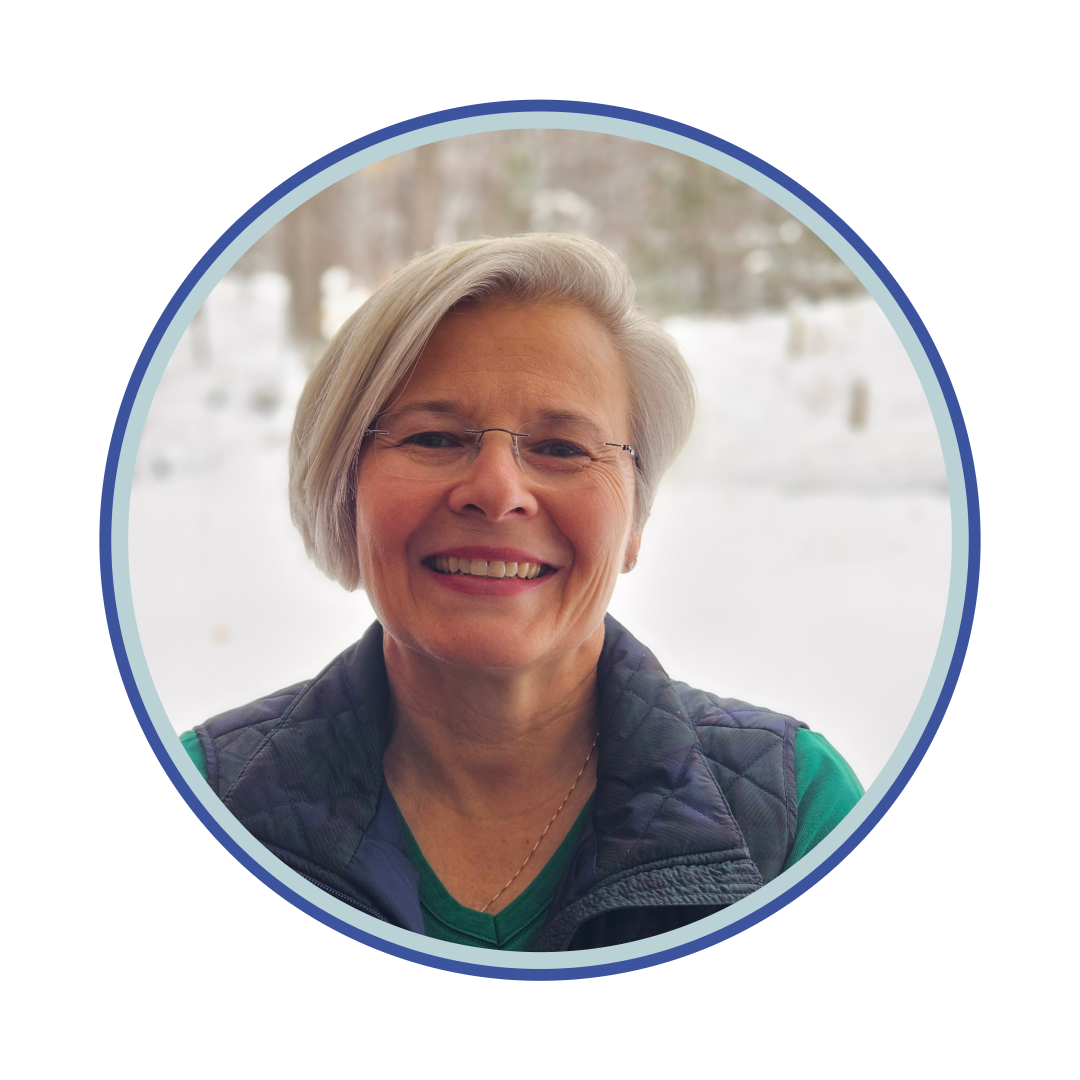
Jen met with GLOS Communications Specialist Sam Johnson back in November 2025. Here is an excerpt from their conversation:
Sam: How many years (and which years) had you worked with or been directly involved with GLOS?
Jen:
“I started in 2008.
From 2005 to 2008, GLOS was at the Great Lakes Commission, under the program manager, Roger Gauthier.
So, I was the first executive director when GLOS became a 501(c)(3) [nonprofit] in 2008. They launched it and sent us off into the world. I won’t say I caught it, but I was there.
And I wrapped up in 2014.”
Sam: How did you find yourself as the Executive Director? What brought you to the organization and the role?
Jen:
“I was the Assistant Director and Research Coordinator for Michigan Sea Grant, and I was a part of the International Upper Great Lakes Study at the time. I happened to be talking to Bill Werick, who was the chairman of the GLOS board, as Sea Grant was heavily involved in the early days of the Great Lakes Observing System. One of the concerns that [we had at] Sea Grant was ‘if you really want to have an impact and you want people to use your products, you need to start by asking them what they need [before] building them those things’.
[After sharing those thoughts], I was invited to come and be the new executive director.
I split my position between the university [of Michigan] and GLOS, and that would enable [GLOS] to hire some [other] people as opposed to just having 1.5 people.
IOOS was really just getting started. It had just been handed over from the Coastal Services Center (CSC) (now known as the Office for Coastal Management) to its own office in NOAA. Up until then, the whole observing and regional association [system] was all really under Margaret Davidson’s purview at CSC.”
Sam: Was GLOS always headquartered in Ann Arbor?
Jen:
“Yes! It was at the Great Lakes Commission initially, and then when they spun us off, I got a space in Nickels Arcade in downtown Ann Arbor.
There was never really any sense of where else GLOS should be headquartered. However, I did really value the fact it was Great Lakes wide, and it came with a network of university-based researchers.
I spent a lot of time trying to sort of move that group into user-based work. They were all over, at Duluth, in Milwaukee, down at SUNY, New York, so they were sort of spread throughout the region. No Canadians yet at that time.”
Sam: Are there any particular projects that stand out in your memory?
Jen:
“There’s one that has stuck in my head all along, and I think it set the stage for my [later] work. I worked really closely with researchers from NOAA GLERL (National Oceanic and Atmospheric Administration Great Lakes Environmental Research Lab). Dave Schwab, who developed the Great Lakes forecasting system, was a great partner when I was at GLOS. He wanted to extend the forecasting system, which had just been, at that time, the surface of the Great Lakes to the connecting channels. In the process of doing that, recognizing that in the St. Clair River in particular, we have a situation where we have upstream potential spill hazards in Sarnia, the Chemical Valley, and we have water intakes all the way down.
So we had several meetings and we got resources to do some modeling work that took advantage of what he was doing with the Great Lakes forecasting system to design tools for water intake managers, and we had [the idea of] this thing you could put up on your [computer] screen, like a dashboard or something, but they wanted lookup charts – look up charts that tell them the travel time from when something goes into the water, where it goes in, when the leading edge is going to hit [the] water intake, when the peak is going to be, and when the trailing edge is [occuring]. [They] wanted to know when to shut down and when it’s going to be safe to turn back on, and without the time to go to a computer to look it up. They just wanted a piece of paper.
So we built them lookup tables, and they [thought this is] the best thing ever.
That’s [an example of] why you ask people what they need. If you don’t, you may ‘build a spaceship, when a bicycle would be great’. I just need to go from here to there. I don’t need to go to Mars first.
I think that then led to the further work that has been done in Lake Erie with the water intakes there. We then had a reputation of listening and responding in a way that met the need that was stated at the time or the geographic resolution or the technical capacity of whoever was going to use the work.”
Sam: What do you see as GLOS’ greatest strength? It’s major milestones? And where do you see the organization going from here?
Jen:
“I feel like you can’t go wrong if you continue to ask your intended users what they need. I think that’s where you’re going to be most effective and in this day and age you need to demonstrate that you’re expanding your resources even more than any time in the past, like effectively meeting the needs of people in economic need.
So, I think being able to tell those stories effectively about how GLOS investments are meeting economic needs is going to be really important going forward.
As a 501c3, [GLOS is] more nimble. It can find those gaps and fill them, because as things overlap, you kind of leave something else uncovered. If you’re funded to do this and you end up doing that, you’ve kind of left a need unmet.
I kind of hold GLOS in the same way as I hold things like the Fisheries Commission or the IJC or the Great Lakes Commission. Just having the ability to move back and forth across the boundary is really valuable. Unfortunately, we stuck our borders in exactly the wrong places, you know, down the middle of the lake(s) instead of around the edge of the watershed, so I feel like organizations like GLOS are really important for the future of the Great Lakes.
GLOS has the ability to continue to listen carefully and fill the gaps in ways that are really going to be important for the whole basin. There is no one else doing that for data at that level: connecting the data across the border.”
Sam: What are your plans for retirement? Do you plan to still be involved with Great Lakes work?
Jen:
“About half of my work is with the National Estuarine Research Reserves system. I run the Science collaborative program.
I moved on from GLOS to really dive into user engaged research, and running this program means I’ve gotten to know people from all around the country in their different research reserves. My goal is to visit them all and check them all out.”
Thank you for sharing a slice of your experience with us, Jen. And thank you for all of your work and contributions to the 20 years of this organization.