
The Great Lakes observing system is made possible by the many passionate Great Lakes research engineers who have envisioned and designed integrated observing systems. Steve Ruberg has been there since the beginning and continues to support the growth and advancement of observing technologies in the region through his work at NOAA’s Great Lakes Environmental Research Laboratory (GLERL).
Steve shared insights and memories from his time working on Great Lakes observing systems, while reflecting on the past 20 years of GLOS.
“GLOS came on the scene and just amplified the real-time network, which was fantastic. They started funding universities to build systems, and it was an excellent combination of the technology being ready and universities having enough technical staff to build buoys and put them out there. GLOS was just a really wonderful coordinator, to get everybody on the same page.”
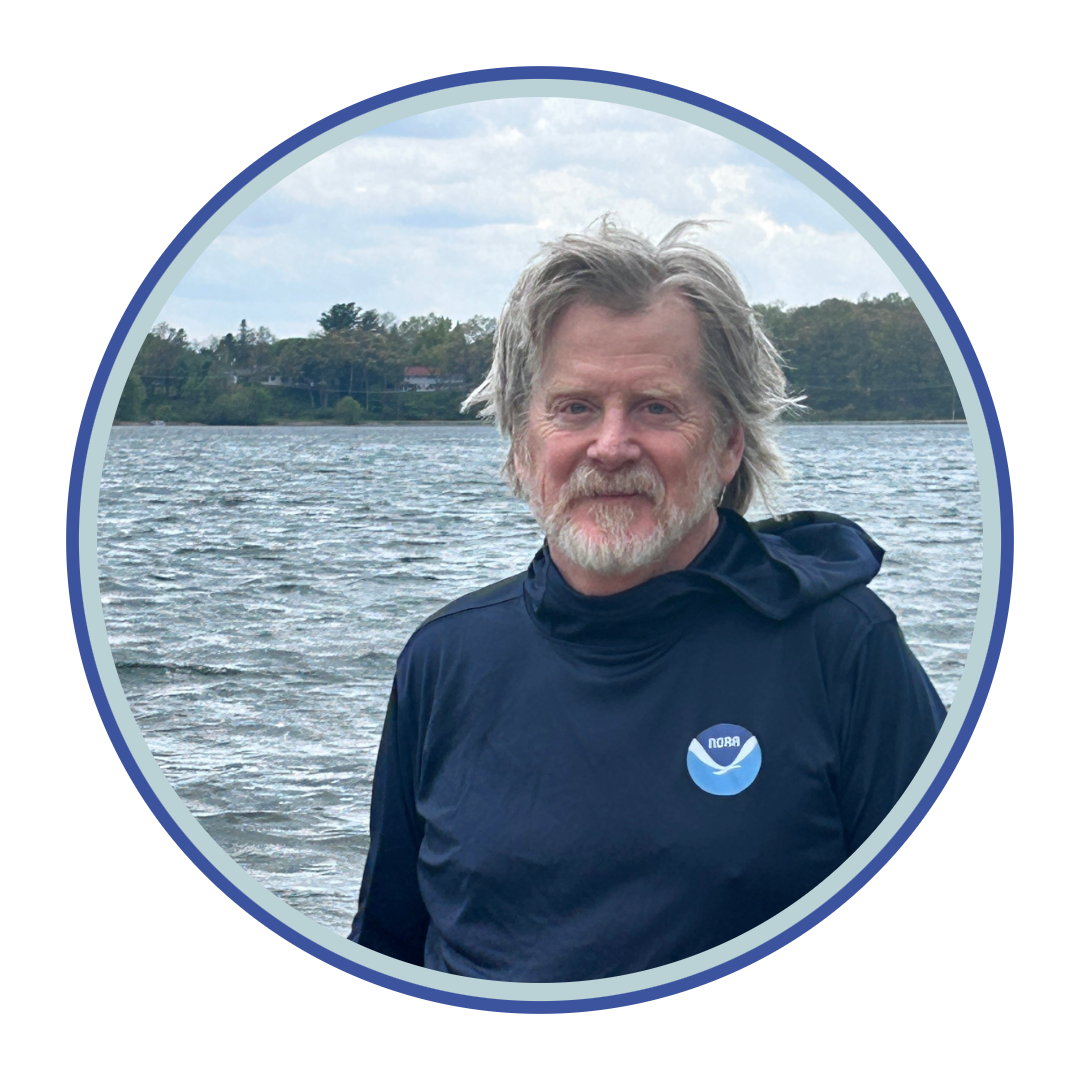
Steve Ruberg
Observing Systems Researcher
NOAA GLERL
What is your role with NOAA’s Great Lakes Environmental Research Lab (GLERL) and how long have you been doing this work?
Steve:
“I have been a Principal Investigator working specifically on observing systems, since about 2004.
Previous to that, I was an engineer working in the Marine Instrumentation Lab.“
Can you give a brief overview of remote sensing and observations of the Great Lakes? How has NOAA GLERL been involved with this work?
Steve:
“NOAA National Data Buoy Center Great Lakes deployments started in the 1970’s after the sinking of the Edmund Fitzgerald when real-time observations of winds and waves were recognized as critically important to maritime navigation safety. GLERL’s work developing and deploying observing technology traces back to the early 2000s, when we were beginning to put out real-time observing systems. Steve Brandt, the GLERL lab director at the time, was a huge advocate of real-time observing systems. He [had a sense of] where the future was going and was involved with some of the early leaders of NOAA’s new Integrated Ocean Observing System when it was just getting started.
We had already built a couple of buoys that were base funded from the lab, and we began to get support from IOOS as well. The first project that I led was called the “Great Lakes Observing System.” Within two years our program, renamed the Real-time Coastal Observation Network (ReCON), became part of the larger Great Lakes Observing System (GLOS).“
What are some of the major milestones or standout periods of change over the history of Great Lakes observations?
Steve:
“In the early days… 1999 was when we first put our first real-time meteorological station out, and people just went crazy because it had this coastal focus. We put observing systems on piers, at the NOAA Lake Michigan Field Station in Muskegon, Michigan, on a tower that’s right there. Other stations were installed on a jetty or on other piers, and getting that data, in real time, was great. That was probably the very first real-time network at GLERL.
Great Lakes surfers especially loved it! They could get the data in real time and know if the winds were strong enough to get those waves that they were looking for. Fishers loved it [too].
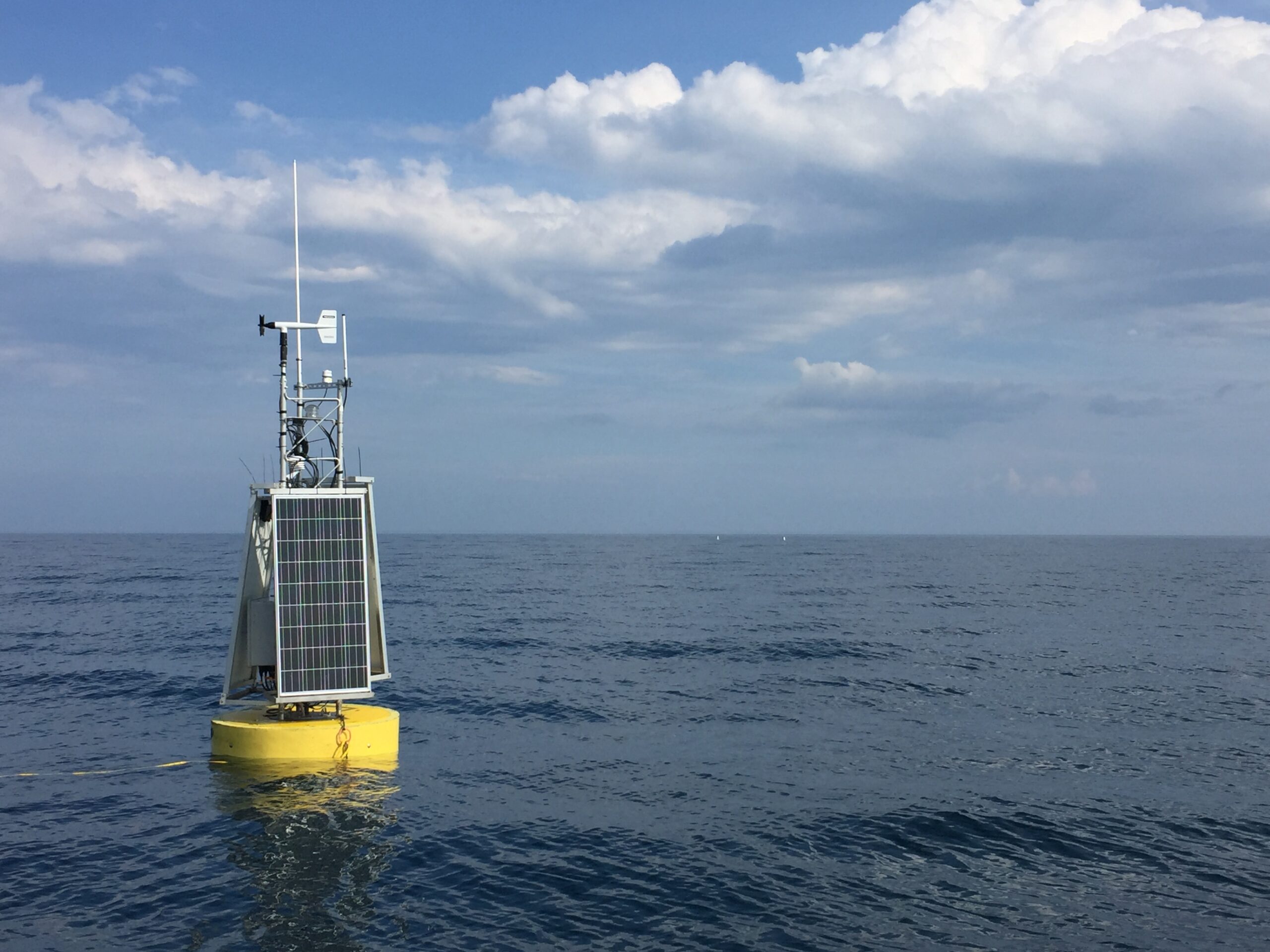
Then we deployed [observing systems] around the southern part of Lake Michigan gradually over the years. We built our first real-time buoy around 2003. We were talking to Great Lakes NOAA National Weather Service marine forecasters, and they said they needed more observations to validate their forecasts. We helped transition the technology to them, which then gave them a lot more information to know whether they had an accurate forecast and also to give them the real-time information that they needed to let commercial freighters, recreational boaters know what was happening on the Great Lakes.
Another event was the Lake Erie Hypoxic Zone. Beginning in 2005, GLERL initiated the International Field Years on Lake Erie (IFYLE) project. There was a big event where the hypoxic zone in the central basin shifted into the drinking water intakes. The Cleveland Water Department asked for help explaining it, then they asked for help putting a buoy out there that would monitor it. We created the first experimental hypoxia forecast system, and then that has [since] been followed by one that’s much more sophisticated. The real-time nature of these observations was critically important.
[Overall], technology has become more approachable. Sensors and data acquisition systems have gotten smaller and cheaper and there are ways to make measurements for much lower costs.”
How has GLOS best supported this work?
Steve:
“GLOS came on the scene and just amplified [the real-time network], which was fantastic. They started funding universities, started building data management and display systems, and it was an excellent combination of the technology being ready and universities having enough technical staff to build buoys and put them out there. [GLOS] was just a really wonderful coordinator, to get everybody on the same page.
The ocean observing system movement moved away from ad hoc sensor deployments to a more comprehensive real-time ecosystem observational network approach. We can really learn a lot more about what’s happening with the ecosystem, with sustained physical and biological observations. GLOS has [also], along the way, been really supportive of helping with harmful algal blooms and getting funding for new sensors, new technologies, [and] new observations.
And [with] Seagull, you’ve really hit a home run: being able to deliver data and forecasts to the public in a way that is much more understandable and digestible. The public was the big benefactor. It’s helping recreational boaters who are near shore, and also commercial freighters. When they’re coming into a port, the wind and wave information that GLOS made possible through buoys from a lot of universities around the Great Lakes; they really rely on that information.“
Is there a particular GLOS project, program, or moment that strikes you as particularly unique or impactful?
Steve:
“With Seagull, the data appears to be more accessible, more approachable than other ways of looking at real-time data. You’re developing a product that is allowing people to ingest the information in an easier format; working on the human interface and how to make that data more presentable. I think you’re really on the right track with Seagull.“
What do you see for the future of Great Lakes observing?
Steve:
“Now that the public and professional users, such as water intake managers and commercial freighters, have access to real-time data, it’s kind of unstoppable. They will want operational products to be continuously improved so they can do their jobs better.
I was just talking to a water intake manager, serving water to 2 million people. He starts his day, every day, asking what’s happening with his raw water input nearshore? What’s happening 14 miles offshore? There’s a buoy north of Cleveland that we transitioned into operations, through the Cleveland Water Department. They really need that situational awareness that observations provide. They save money and keep their water – their product – free from bad taste, odor, and discoloration on a much safer level.
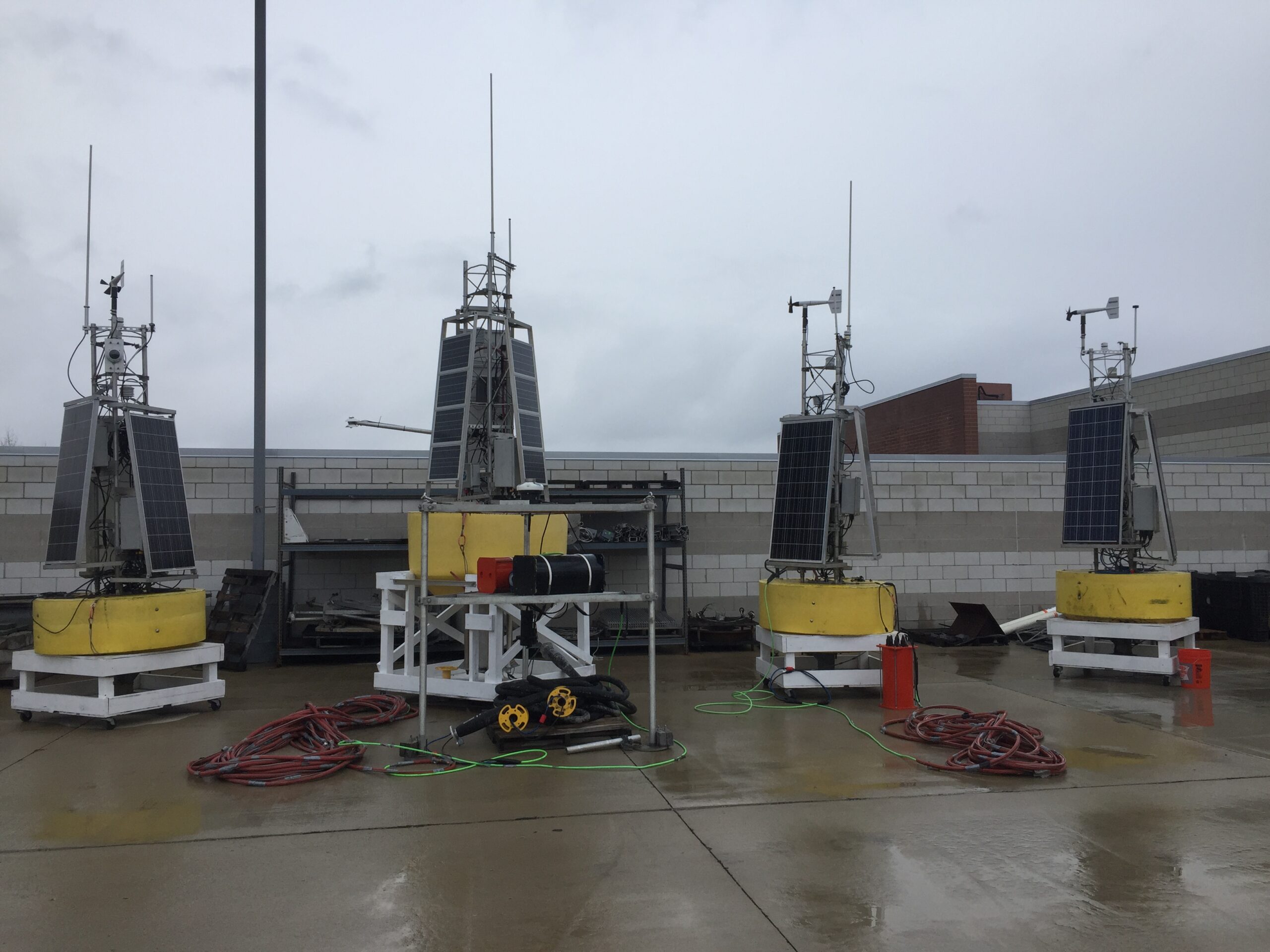
We know that standard open water physical observations as well as chemical and biological measurements are important to Great Lakes professional users, so [they] are here to stay. The demand for observations is not going to go away.
What we’ve been working on for the last several years is improving our ability to get winter ecosystem observations. One more recent approach is the use of cabled systems operating from navigational structures or water intakes that can operate year-round.
The next natural thing is to have autonomous vehicles operating with cabled systems providing docking stations for vehicle recharging and data transfer. A user such as a researcher or water intake manager can then direct the vehicle to a specified location for routine data collection or in response to unusual events. You can send it far and wide, to cover large spatial areas, and come back and deliver its data.
We’ve gone from stationary observing systems that are giving us really incredible, high resolution time series data, to a system that you can go practically anywhere, bring its data back in, and provide that to the specific user.“
Thank you, Steve! Your many years of work on observing systems has been instrumental to the success of the Great Lakes network. Principal investigators such as yourself are critical to keeping the region informed and lake users safe.
